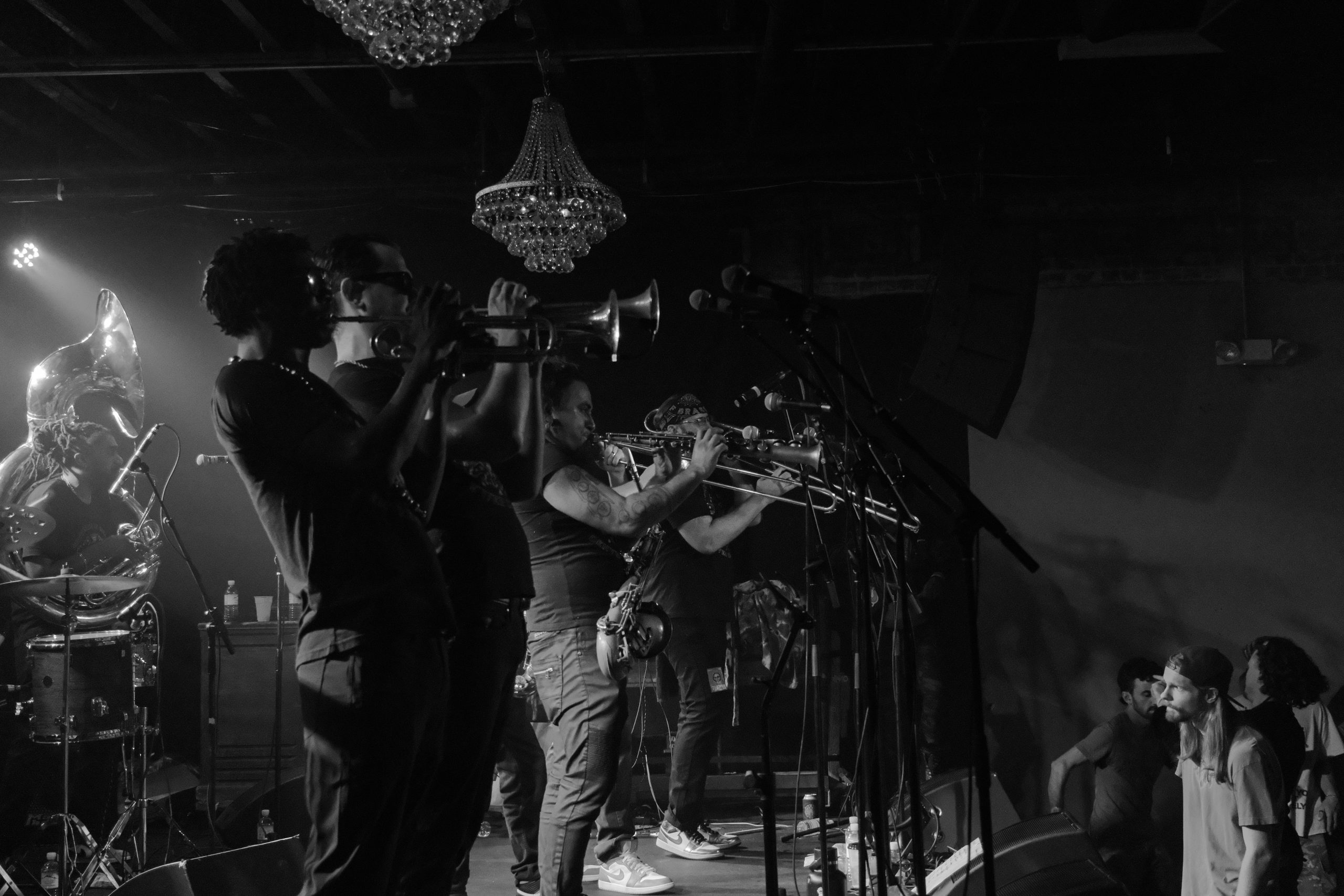
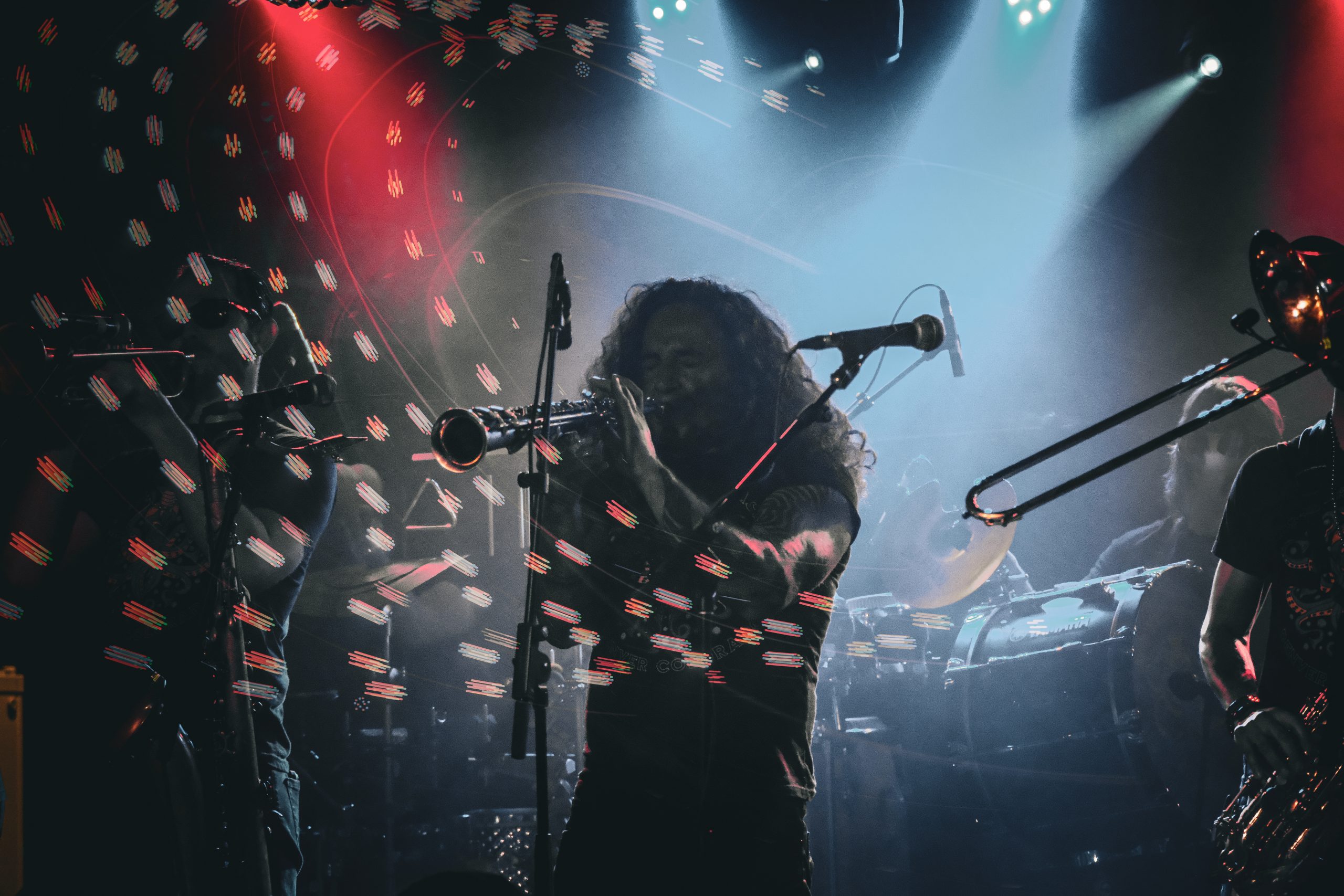
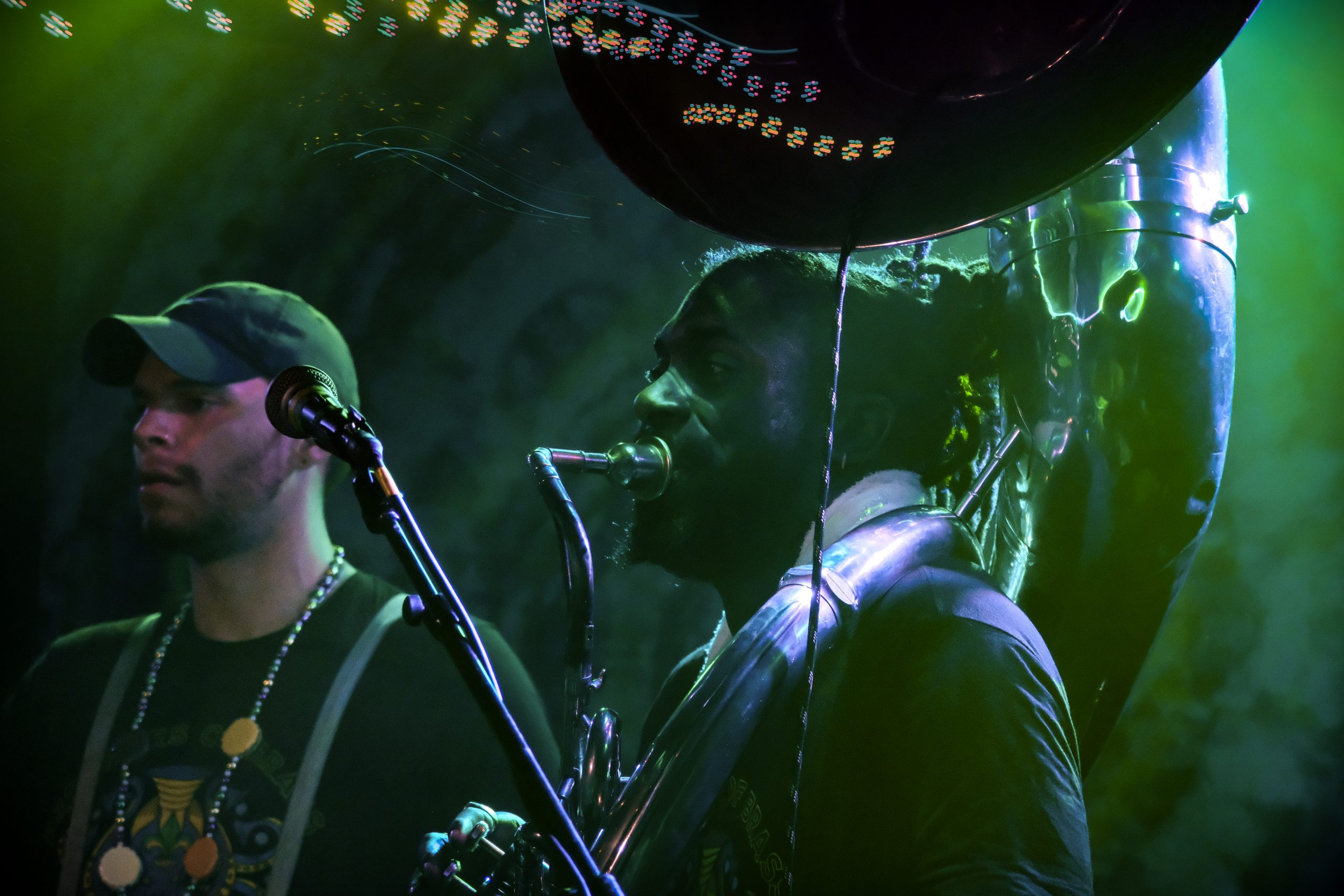
Our Story

From shared instruments and cold sidewalks to sold-out venues and festival main stages,
Brothers of Brass is more than a band – it’s an evolving story of resilience, Black joy, and
street-born sound.


Origins: One Horn, No Money, Big Dreams

Brothers of Brass traces its roots to Atlanta, Georgia, where bandleader Khalil Simon and his close friends David and Eryk started out as broke, hungry musicians with more ambition than gear. There were nights when Khalil and David literally shared a single trumpet, taking turns playing because they couldn’t afford another horn. They huddled against brick walls borrowing Wi-Fi from nearby businesses to pull up sheet music and expand their repertoire, grinding out less than $20 a day apiece until they learned the city and inched their way toward Peachtree Street.

A turning point came during Dragon Con, when they met Eryk “EJ” busking on the same corner. Instead of competing, they teamed up. EJ introduced the idea of playing event egresses — catching the flood of fans leaving Braves games at Turner Field — and that shift in strategy transformed the hustle, pushing their take into the hundreds per man on strong nights.

Even as they built momentum, they faced police pressure, busking restrictions, racial profiling, and the typical turf wars of street music. But their deep backgrounds in Southern marching bands — and especially Khalil’s HBCU marching band training — meant they already knew how to project, move a crowd, and hold a line. That HBCU discipline and arrangement style would later become one of the driving forces behind Brothers of Brass’s tight grooves, precise hits, and big-band energy onstage. Music wasn’t just income; it was identity and survival.


Landing in Denver: A New Home for a New Sound

When baseball season ended and the Atlanta weather turned cold, the band decided to chase opportunity in other cities. Some runs flopped; others clicked. One gamble led them to Denver. Testing an egress outside Coors Field, they felt something different in the air – a city where their sound and story actually fit.

Khalil and David moved permanently on December 6, 2014, and a late-night Google search for indoor performance spots led them to the Denver Center for the Performing Arts (DCPA), where they began busking bundled up outside holiday shows like The Grinch. Those nights planted the seeds of what would become one of Denver’s most recognizable sounds

The real spark of the modern lineup came in 2015 on the 16th Street Mall, when Khalil and
David crossed paths with saxophonist Armando Lopez and drummer Jake Herman, who were performing around Denver as part of a rotating street ensemble called Nimbus. Armando, originally from Los Angeles with a deep jazz pedigree, had always hoped to find a tuba player; when he heard Khalil’s sousaphone roaring down the block, he followed the sound.

That first jam on the mall led to DCPA egresses together and, eventually, to an official invitation: when David left to join the U.S. Marines in 2016, Khalil folded Armando and Jake fully into Brothers of Brass, preserving the name and legacy while giving the project its Denver-based heartbeat.


The Heartbeat: Azad’s Arrival, Genius, and Lasting Impact

A defining chapter in the band’s story came with Krishnaswami Ramachandran Azad, who
moved from Kansas specifically to join Brothers of Brass. Azad didn’t just bring groove – he
brought belief, brains, and a whole extra dimension of nerddom and joy.

He was a Super Smash Bros legend and hardcore gamer, a comedian, and a person whose
default mode was making people laugh. Offstage he might be holding a controller or dropping jokes; onstage he was the calm in the middle of the storm, anchoring chaos with ridiculous precision.

Azad held a degree in music composition, and it showed. He was an elite arranger whose brain processed complex time signatures like basic arithmetic. He could hear odd meters and break them down mathematically in seconds, then hand the band a roadmap through grooves most people would be scared to touch. For Brothers of Brass, he wasn’t just the drummer — he was the architect of feel, someone who could morph the beat around hip-hop, second line, funk, and psychedelic jam energy without losing the pocket.


From 2017 on, Azad became a central pillar of the band’s Denver era. He joined for early tours, lent his vehicle for long-haul runs, and helped transform Brothers of Brass from a raw street act into a show-ready ensemble that could handle club sets, festival slots, and protest marches with the same intensity. His bass drum and snare became the pulse that pushed the band into its first waves of regional and national recognition.

In May 2021, Azad passed away unexpectedly, and the loss ripped through the Denver music community. For Brothers of Brass, it was more than losing a bandmate — it was losing family. He was, in the band’s eyes, the best drummer this band — and maybe this world — has ever seen. His death marked a major emotional turning point; shows became heavier, tributes more frequent, and the band’s commitment to honoring his name grew deeper.


When Brothers of Brass finally headlined and sold out Cervantes’ Masterpiece Ballroom for their Street Life Vol. 2 album-release show, his absence was felt in every cheer. That night was his win as much as anyone’s.


We will never forget Azad. His rhythm still rides inside every second-line groove they play, his arrangements echo in the horn lines, and his spirit – equal parts genius, gamer, drummer, and clown – is woven into the DNA of Brothers of Brass


Street Legends, Protest Soundtrack

On most days in Denver, you don’t need a ticket to hear Brothers of Brass. For nearly a decade, they’ve been a living part of the city’s soundtrack – tearing up the 16th Street Mall, DCPA let-outs, Rockies and Broncos games, and Phish lots at Dick’s Sporting Goods Park.

Their presence isn’t limited to parties and ballgames. During the George Floyd protests in 2020, the band became part of the movement’s emotional core, leading marches, amplifying chants, and turning rage and grief into something organized and powerful. Brothers of Brass stepped fully into the role of protest marching band, blending megaphones and sousaphones, chants and horn lines.


That dual identity — party starters and pressure-valve for the community — remains central to who Brothers of Brass is today.


From Sidewalks to Stages: Tours, Festivals, and Big Collabs


What started as a scrappy street project has grown into a band that regularly shares stages with national heavyweights. Over the years, Brothers of Brass has:


● Performed at legendary venues and festivals, from club stages to outdoor amphitheaters.
● Shared bills or collaborated live with artists and bands including Murs, Leftover Salmon, Lettuce, Rebirth Brass Band, Moon Taxi, The String Cheese Incident, The Motet, and more.
● Become a go-to horn and drum section for jam bands, funk acts, and hip-hop projects looking to bring a live brass explosion to their sets.


In 2019, the band undertook a cross-country busking tour that felt more like a rolling experiment than a traditional tour. Traveling in multiple vehicles, they crisscrossed the country primarily to busk — hitting city corners, stadium parking lots, and any space where a crowd might gather. That marathon run culminated in a massive moment at the Forecastle Music Festival in Louisville, Kentucky, where Brothers of Brass performed with Moon Taxi in front of tens of thousands of people. A documentary about that wild 2019 trip is now in the works for the band’s YouTube channel, capturing the chaos, hustle, and hidden battles behind the highlight reels.


They transitioned naturally from sidewalks to festival stages, commanding crowds while still carrying the energy of street music. Whether they’re opening a night, playing late-night sets, or leading a second-line parade through a festival grounds, Brothers of Brass brings the same intensity they once brought to mall corners and stadium exits.


Outside Days & Festival Momentum

● In 2024, they joined a lineup featuring Thundercat, Lettuce, Fleet Foxes, Andrew Bird, and more, representing Denver’s homegrown brass and street-music roots among national headliners.
● In 2025, they returned to the festival on a bill topped by Khruangbin, Lord Huron, Sylvan Esso, Trampled by Turtles, and Waxahatchee, further cementing their role as one of Colorado’s go-to live bands.
● In 2026, Brothers of Brass steps up again as Outside Days rebrands and expands to a three-day event in downtown Denver. On Saturday, May 30, they share the main-stage bill with My Morning Jacket, The Flaming Lips, Dawes, Eggy, and Karina Rykman, effectively opening the day for My Morning Jacket and standing shoulder-to-shoulder with some of the most beloved live bands of their generation.

Across these years, Outside Days and its earlier incarnation have helped showcase Brothers of Brass to thousands of new listeners, placing a once-busking band squarely in the festival conversation.


The Studio Era: Street Life on Record

On record, Brothers of Brass blends New Orleans brass tradition with funk, hip-hop, R&B, and psychedelic jam textures. Their catalog moves from hard-hitting street anthems to more experimental tracks that reflect the band’s love of underground hip-hop, complex grooves, and cinematic horn writing.

Their growing discography includes Street Life Vol. 1, remixes, a Christmas EP, and a run of
singles leading into Street Life Vol. 2 and the more psychedelic-leaning Trapadelics material. The single “Mile High”, released around Denver’s 303 Day celebrations, captures everyday city life — Coors Field fireworks, traffic tickets, and the grind of trying to build something new in a city that’s still figuring itself out.

The group’s studio sound continues to evolve, but one constant remains: the HBCU marching band discipline and arranging sensibility that Khalil brings to the table. That training is embedded in the way hits line up, shout sections explode, and the horns move as one organism instead of a bunch of soloists screaming in different directions.


Digital Expansion & Documentary Vision

Beyond live shows, Brothers of Brass is steadily carving out a storytelling lane online. Their
YouTube channel and social platforms act as a second stage, offering fans around the world a window into:


● Live street performances and festival sets
● Behind-the-scenes touring chaos
● Studio and rehearsal footage
● Collaborations with artists across genres


The band is now leaning deeper into documentary-style content, using video to show not just the polished moments, but the reality of what it takes to keep a large brass band moving across cities and years — the vans, the breakdowns, the weather, the police, the promoters, the triumphs, and the times it almost falls apart.

Among these projects is the upcoming documentary about their 2019 cross-country busking tour and Forecastle performance with Moon Taxi, which will give fans a front-row seat to one of the most intense and formative runs in the band’s history.


Community, Identity, and Ongoing Legacy

Media across Colorado and beyond increasingly point to Brothers of Brass as part of the fabric of modern Denver – a band that represents both the city’s changing sound and its ongoing struggles and celebrations. They’ve been recognized as busking heroes turned protest marching band, cultural ambassadors of New Orleans brass on Colorado soil, and a living reminder that street music can shape a city’s identity as much as any club or arena show.


Through all of that, some things haven’t changed:


● They still value street performance as a core part of their identity.
● They still build shows around call-and-response, crowd hype, and the joyful chaos of a second line.
● They still operate with the mindset that every night could be the night that changes everything — whether it’s on a mall corner, a club stage, or a festival lawn in front of tens of thousands of people.


From following jam bands in dusty vans to leading protests through downtown streets, from shared trumpets in Atlanta to opening festival days for My Morning Jacket in Denver, Brothers of Brass remains rooted in authenticity, hustle, and gratitude.


This is music with memory.


This is sound with soul.


And the story is still being written.